Residential · Derbyshire & the Peak District
Roofing ServicesDetailed at the JunctionsChesterfield, Derbyshire & the Peak District
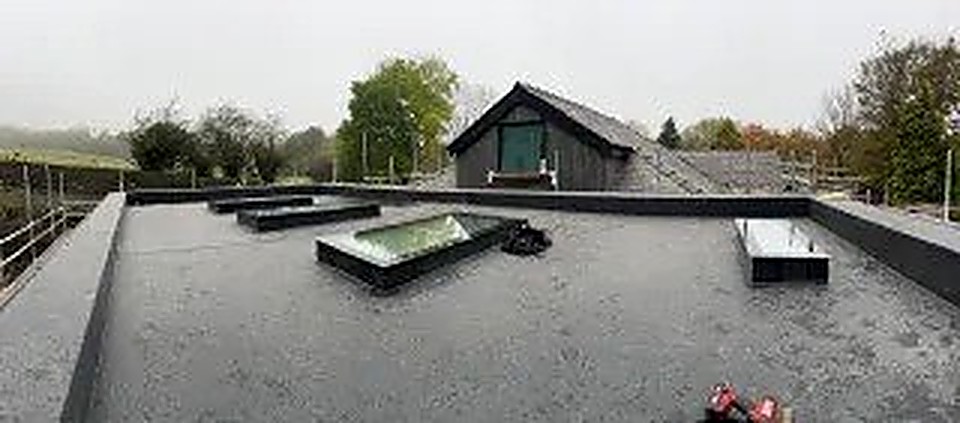
Pitched and flat roofing, slate, tile, zinc and leadwork, detailed properly at the flashings, valleys and abutments where roofs actually fail: built to keep water out for decades, not until the next heavy winter.
Fully insured to £10M, with structural roof work covered by our 10-year guarantee.
25+
Years building in Derbyshire
150+
Projects completed
10 yr
Structural guarantee
£10M
Fully insured
What roofing work actually involves
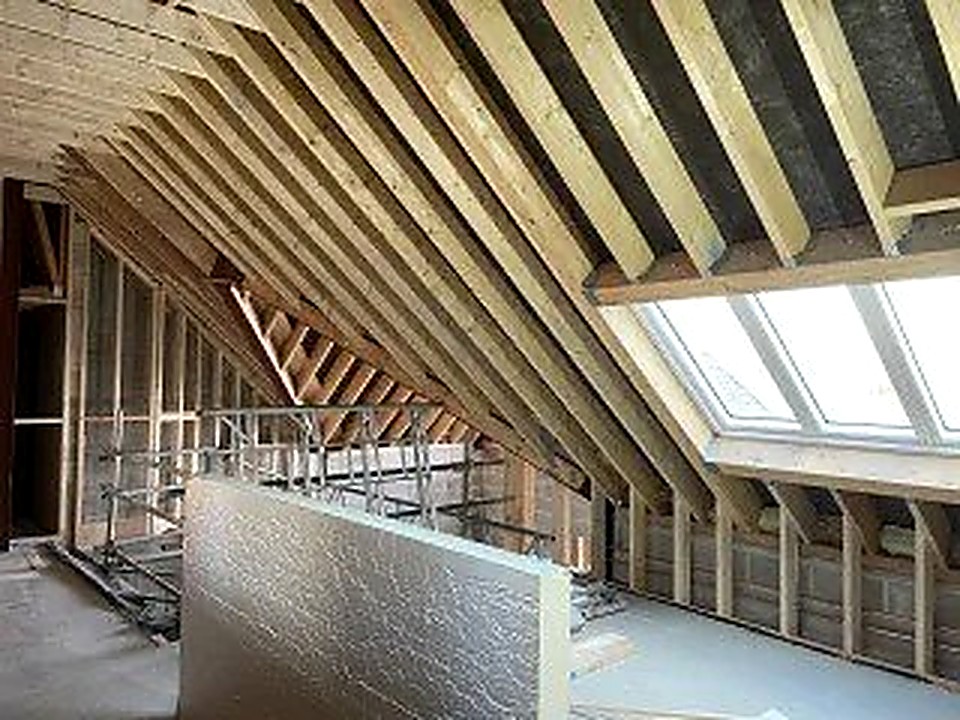
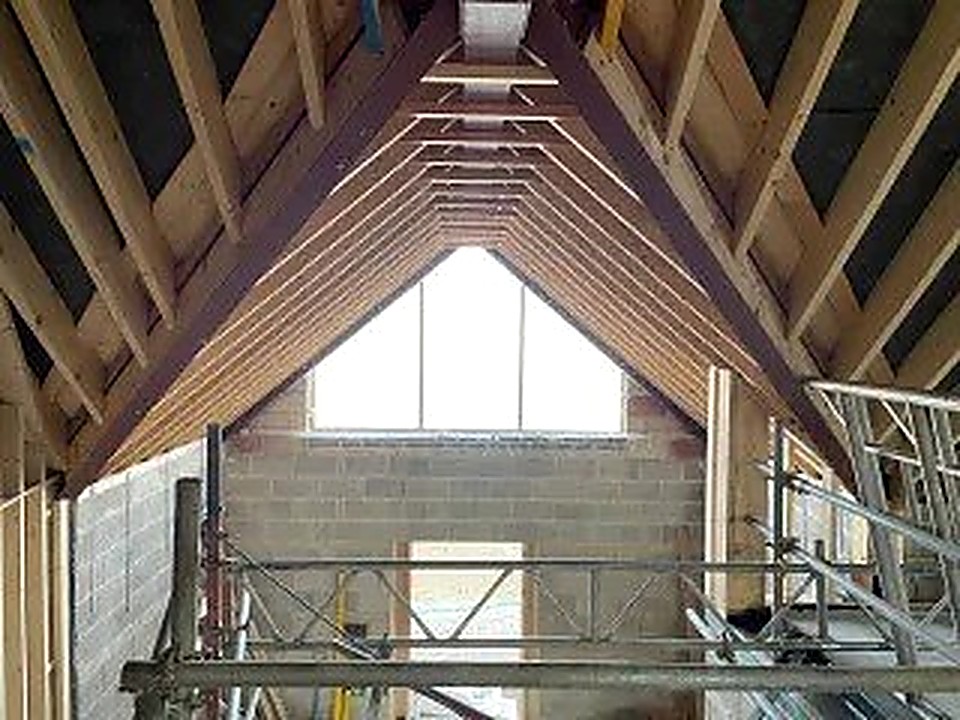
Roofing covers everything from a full re-roof stripping back to the rafters and rebuilding with new slate or tile, through to flat roof replacement, repairs to isolated leaks, and specialist work like standing-seam zinc or traditional leadwork on period properties. The common factor is that a roof only has to fail at one point, one junction, one flashing, to let water into the building.
This work suits homeowners whose existing roof covering has reached the end of its service life, anyone extending or altering a property where a new roof section needs to tie into the existing structure, and owners of period properties needing traditional materials, natural slate, clay tile, lead flashing, matched to the building's character.
It becomes necessary when a roof shows visible signs of failure: slipped or missing tiles, damp patches on ceilings, daylight visible through the roof space, or proactively when a roof is approaching the end of its expected lifespan and a planned replacement is more cost-effective than repeated emergency repairs.
Professional roofing work matters because most roof failures happen at details, not across the main roof plane: valleys where two roof slopes meet, abutments where a roof meets a wall or chimney, and penetrations for pipes or rooflights. These are also the details that are hardest to inspect after the event and the most expensive to get wrong.
A roof detailed correctly at every junction, with the right materials for the pitch and exposure, should perform without significant attention for decades; the whole point is not having to think about it.
What the work includes
- Full re-roofs, slate and tile
- Standing-seam zinc and single-ply flat roofing
- Leadwork, flashings and valley detailing
- Insulation, ventilation and rainwater goods
New to us? Start with Weir Construction Group, see our recent work or talk to John directly.
The cost of leaving it
Why roofs fail and what it costs when they do
The overwhelming majority of roof leaks originate at junctions rather than the open roof plane: a poorly formed valley, a flashing that's lifted or wasn't dressed correctly into the brickwork, or a penetration around a soil pipe or rooflight that was sealed with mastic instead of a proper lead or membrane detail. Cheap roofing exposes itself here within a couple of winters, while the main tiled or slated area can look fine for years.
Water getting into a roof structure doesn't stay contained. It tracks along rafters and battens, soaks insulation (reducing its effectiveness and adding weight), and eventually shows as a ceiling stain that can be metres away from the actual point of entry, making diagnosis of a badly detailed roof genuinely difficult without stripping back the covering.
Left unaddressed, water ingress leads to rotten rafters and battens, damaged ceilings and, in cases of prolonged ingress, mould growth affecting air quality in the rooms below. Cost escalation is significant: a flashing repair costs a fraction of replacing rotten roof timbers and redecorating a ceiling that's collapsed under the weight of trapped water.
Mistakes we are asked to put right
- Patching a leak repeatedly instead of investigating and fixing the actual junction causing it
- Using mastic or sealant as a permanent fix for flashing or valley problems instead of proper leadwork
- Leaving moss and debris to build up in valleys and gutters, causing water to back up under tiles
- Choosing the cheapest re-roof quote without checking underlay, ventilation and flashing specification
- Ignoring a small ceiling stain, assuming it's old and no longer active
Our process
How a roofing services project runs
Step 1
Survey and diagnosis
John inspects the roof from the loft space and externally, identifies the cause of any existing issue, and agrees the scope of work and a fixed, itemised quote.
Step 2
Scaffold and strip out
Scaffolding is erected to current safety standards, and the existing roof covering, felt and battens are stripped back to the structure where a re-roof is required.
Step 3
Structural and timber checks
Rafters and battens are inspected for damage or rot, with any structural timber replaced before the new covering goes on.
Step 4
Underlay, insulation and ventilation
New breathable membrane, insulation and ventilation are installed to current building regulations before the roof covering is fixed.
Step 5
Covering, flashing and detailing
Slate, tile, zinc or leadwork is installed, with valleys, abutments and penetrations detailed carefully as the points most likely to fail.
Step 6
Testing and sign-off
The completed roof is inspected for correct drainage and weatherproofing, with structural work covered by our 10-year structural guarantee.
What you get
Why this work is worth doing properly
Faster turnaround with proper scaffolding
Correct access and sequencing from the outset means the roof isn't left open to weather longer than necessary during a re-roof.
Safety through structural inspection
Rafters and battens are checked and replaced where needed before new covering goes on, rather than covering up a weakened structure.
Decades of watertight performance
Careful detailing at valleys, abutments and penetrations, the points that actually fail, means the roof performs long after the covering warranty period.
Cost control from a fixed quote
Scaffolding, materials, timber replacement and flashing work are all itemised up front, with changes confirmed in writing before proceeding.
Reliable materials and methods
Natural slate, clay tile, standing-seam zinc and traditional leadwork are installed to manufacturer and trade body specifications, not cut-price alternatives.
Peace of mind on structural elements
Any structural roof work, new timbers, altered pitch, structural openings for dormers, carries our underwritten 10-year structural guarantee.
Detail & specification
Materials, methods and technical detail
A pitched re-roof begins with stripping to the rafters, replacing any damaged timber, then installing a breathable roofing membrane, battens at the correct gauge for the tile or slate being used, and adequate ventilation at eaves and ridge to prevent condensation building up in the roof space.
Valleys are formed using either a lead-lined valley or a proprietary valley trough system, both designed to channel water from two converging roof slopes without allowing it to back up under the tiles either side: a detail that fails quickly if undersized or poorly lapped.
Flashings at abutments, where a roof meets a chimney, wall or parapet, are typically formed in code 4 or 5 lead, dressed into a raked joint in the masonry and stepped to follow the roof pitch, giving a genuinely long-term watertight junction rather than a surface-applied sealant strip.
Flat roofing uses single-ply membrane or built-up felt systems laid to a minimum fall for drainage, with upstands and outlets detailed to shed water reliably; standing-seam zinc roofing uses interlocking seams that allow for thermal movement without opening a path for water.
Roofing work spans residential re-roofs and repairs through to commercial flat roof replacement on shops and hospitality buildings, with the same detailing standards applied to both.
Materials & systems we work with
- Natural slate and clay or concrete roof tiles
- Breathable roofing membrane and treated battens
- Code 4 and code 5 lead for flashings and valleys
- Standing-seam zinc roofing systems
- Single-ply membrane and built-up felt flat roofing
- Eaves and ridge ventilation systems to current regulations
- Structural timber for rafter and batten replacement
- Cast iron and uPVC rainwater goods
Full re-roofs in slate or tile
Complete strip and replacement of the roof covering, underlay and ventilation, with new flashings throughout.
Flat roof replacement
Removal of an ageing felt or asphalt flat roof and replacement with a single-ply membrane system to correct falls.
Traditional leadwork and repairs
Chimney flashings, valley leadwork and repairs on period properties, matched to existing detailing and materials.
Standing-seam zinc roofing
Contemporary zinc roofing for new builds, extensions and garden rooms, detailed for long-term movement and weathering.
Standards you can check
Accreditations behind every contract
FMB Accredited
Federation of Master Builders membership: independently vetted for quality, financial stability and customer satisfaction.
Derbyshire Trusted Trader
Approved by Derbyshire County Council's Trading Standards team after background checks and customer reference verification.
£10M Insured
Full public liability, employer's liability and professional indemnity cover. Certificates available on request.
NICEIC & Gas Safe
Electrical installations certified by NICEIC-registered electricians. Gas work completed by Gas Safe registered engineers.
Questions clients ask
Roofing Services: frequently asked questions
How much does a re-roof cost?
It depends on the roof size, pitch, material specified and the condition of the existing structure. John surveys the roof and provides a fixed, itemised quote covering scaffolding, materials and labour.
How long does a re-roof take?
A typical domestic re-roof takes one to two weeks depending on size and weather, with the timeline set out in a written programme before work starts.
Will scaffolding be up for the whole job?
Yes, scaffolding is erected for the duration of the works to give safe access to the whole roof and is removed once the work is complete and inspected.
Do you repair leaks or only do full re-roofs?
Both, many jobs are targeted repairs to a failed flashing, valley or isolated area rather than a full re-roof, and we diagnose the actual cause before recommending either.
What guarantee do you offer on roofing work?
Structural roofing work is covered by our underwritten, transferable 10-year structural guarantee, and we stand behind the workmanship on all roofing projects.
Can you match traditional slate and leadwork on a period property?
Yes, we carry out traditional leadwork and can source natural slate and clay tile to match existing period roofing where required.
How disruptive is a re-roof to daily life inside the house?
There's noise from scaffolding erection and stripping the old covering, but most of the work happens externally and the loft space is the main area affected inside.
Do you cover roofing work outside Chesterfield?
Yes, we carry out roofing services across Derbyshire, the Peak District and into South Sheffield.
Related services
Property Extensions
New Build Homes
Loft Conversions
Garage Conversions
Refurbishments
Kitchen Renovations
Or browse every service we offer and the areas we cover.
Next step
Get a fixed quote for your roofing project
Call John on 07891 214075 to arrange a roof survey, whether it's a repair or a full re-roof. Office hours are Monday to Friday, 8am–5pm, with a same-day callback in most cases.